
Event Medical Cover: Why CQC Standards Matter
Whether it's a community festival, sporting event, air show, concert, agricultural show, or large-scale public gathering, event organisers have a legal and moral responsibility to ensure appropriate medical provision is in place. Effective event medical cover is about far more than simply having an ambulance on site; it is about providing a safe, responsive, and clinically governed healthcare service that can meet the needs of attendees, participants, staff, and volunteers.
In the UK, the standards established by the Care Quality Commission (CQC) play a critical role in ensuring that medical services provided at events are safe, effective, caring, responsive, and well-led.
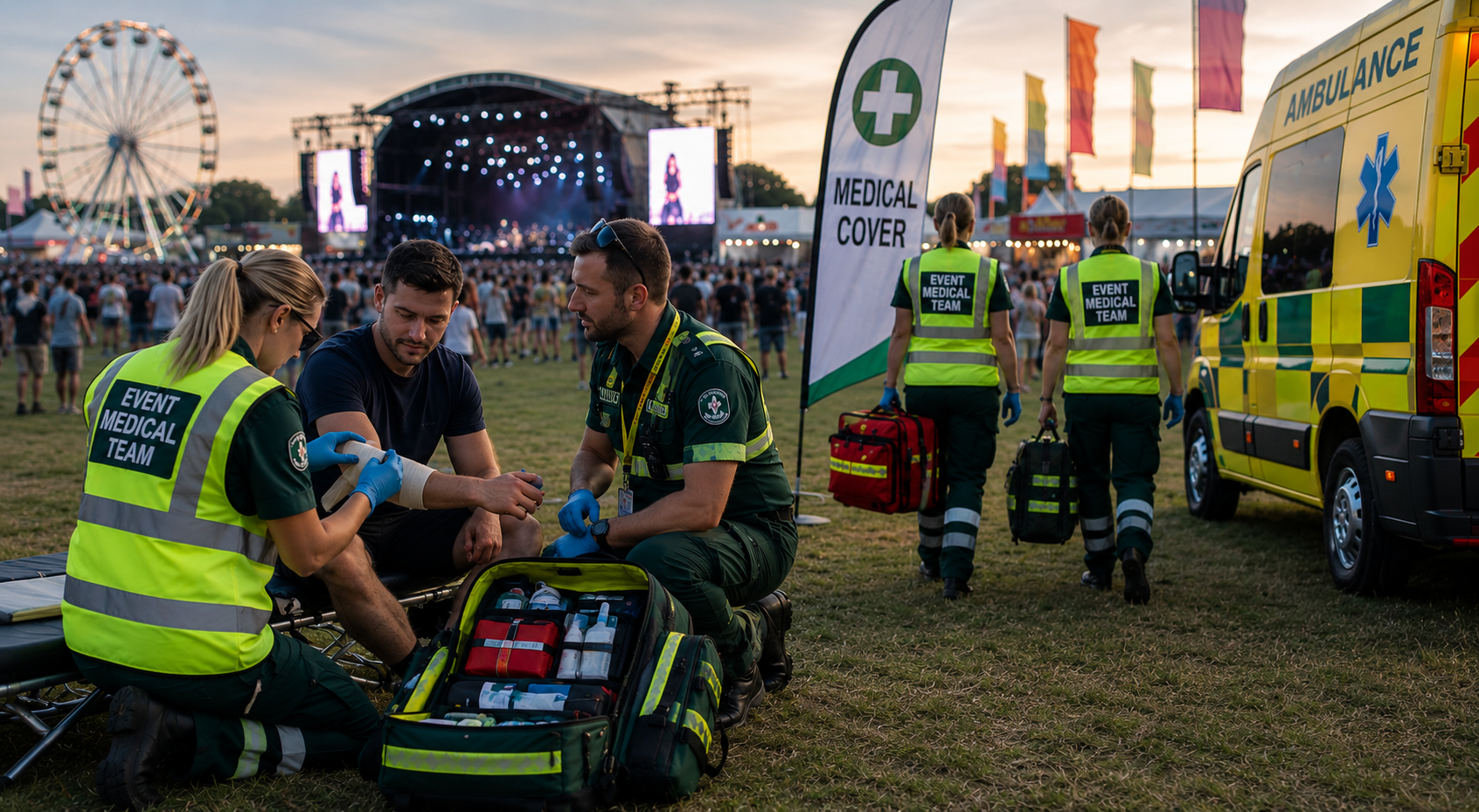
What Is Event Medical Cover?
Event medical cover refers to the healthcare resources deployed at an event to manage illness, injury, and medical emergencies. Depending on the size and nature of the event, this may include:
First aiders
Emergency Care Assistants
Ambulance crews
Registered Paramedics
Nurses
Doctors
Treatment centres
Ambulances and rapid response vehicles
Clinical management teams
The level of provision required should be based on a robust medical risk assessment that considers factors such as attendance numbers, demographics, event activities, environmental conditions, alcohol consumption, and access to local NHS services.
Understanding the Role of the CQC
The Care Quality Commission is the independent regulator of health and social care services in England. Any organisation providing regulated healthcare activities, including many private ambulance and event medical providers, may be required to register with the CQC.
The CQC assesses services against five key questions:
Is the Service Safe?
Safety is fundamental to event healthcare provision. Medical providers should demonstrate:
Appropriate staffing levels
Competent and trained personnel
Effective infection prevention measures
Robust medicines management
Clear safeguarding arrangements
Incident reporting and learning systems
A safe service identifies risks before they become incidents and continually reviews performance to improve outcomes.
Is the Service Effective?
Clinical interventions must be evidence-based and delivered by appropriately qualified professionals.
Effective event medical services should have:
Clinical governance systems
Up-to-date clinical guidelines
Regular competency assessments
Continuing professional development programmes
Strong relationships with local NHS partners
Patients should receive care that reflects current best practice and professional standards.
Is the Service Caring?
Attendees experiencing illness or injury are often anxious and vulnerable.
Medical teams must provide care that is:
Compassionate
Respectful
Dignified
Person-centred
A positive patient experience is an essential component of quality healthcare, regardless of whether treatment is delivered in a hospital, an ambulance, or a temporary event treatment facility.
Is the Service Responsive?
Events can be unpredictable. Medical providers must be prepared to respond rapidly to changing circumstances, including:
Major incidents
Extreme weather conditions
Crowd surges
Multiple casualty incidents
Unexpected increases in demand
Responsive services maintain flexibility while ensuring that patients receive timely and appropriate care.
Is the Service Well-Led?
Strong leadership underpins every successful event medical operation.
Well-led organisations demonstrate:
Clear accountability structures
Effective communication systems
Clinical oversight
Continuous quality improvement
A positive safety culture
Leadership teams should promote learning, transparency, and professional excellence across the organisation.
Why CQC Registration Is Important
For event organisers, selecting a CQC-registered provider can provide confidence that healthcare services are subject to independent regulatory oversight.
While registration alone does not guarantee excellence, it demonstrates that an organisation has met regulatory requirements relating to governance, staffing, safety, and patient care.
Organisers should also seek assurance regarding:
Clinical governance arrangements
Insurance coverage
Staff qualifications and competencies
Medical equipment standards
Medicines management processes
Incident reporting procedures
Major incident planning
Beyond Compliance
The most effective event medical providers view CQC standards as a foundation rather than a target.
High-quality providers invest in:
Continuous staff development
Robust clinical governance
Patient experience improvement
Collaborative working with emergency services
Evidence-based practice
Innovation and learning
The goal should always be to deliver safe, effective, and compassionate care while reducing pressure on local NHS resources and ensuring the event can proceed safely.
Conclusion
Event medical cover is a critical component of event safety planning. By choosing providers that embrace CQC principles and maintain strong clinical governance, event organisers can help ensure that attendees receive high-quality healthcare when they need it most.
Ultimately, successful event medical provision is not measured solely by response times or equipment levels, but by the ability to deliver safe, effective, caring, responsive, and well-led care in often challenging and dynamic environments.
As events continue to grow in scale and complexity, maintaining these standards has never been more important.
